Modernizing the EHR Experience
Redesigned a legacy clinical platform into a patented, multi-device HTML5 ecosystem, defining desktop and tablet UX to help physicians to capture what they need and operate at top of license
COMPANY
Practice Fusion
Location
San Francisco, CA
Year
Nov 2013 - Jul 2015
ROLE & TEAM
Senior UX partnering with team of 20+, 4 PMS, multiple eng partners
Overview
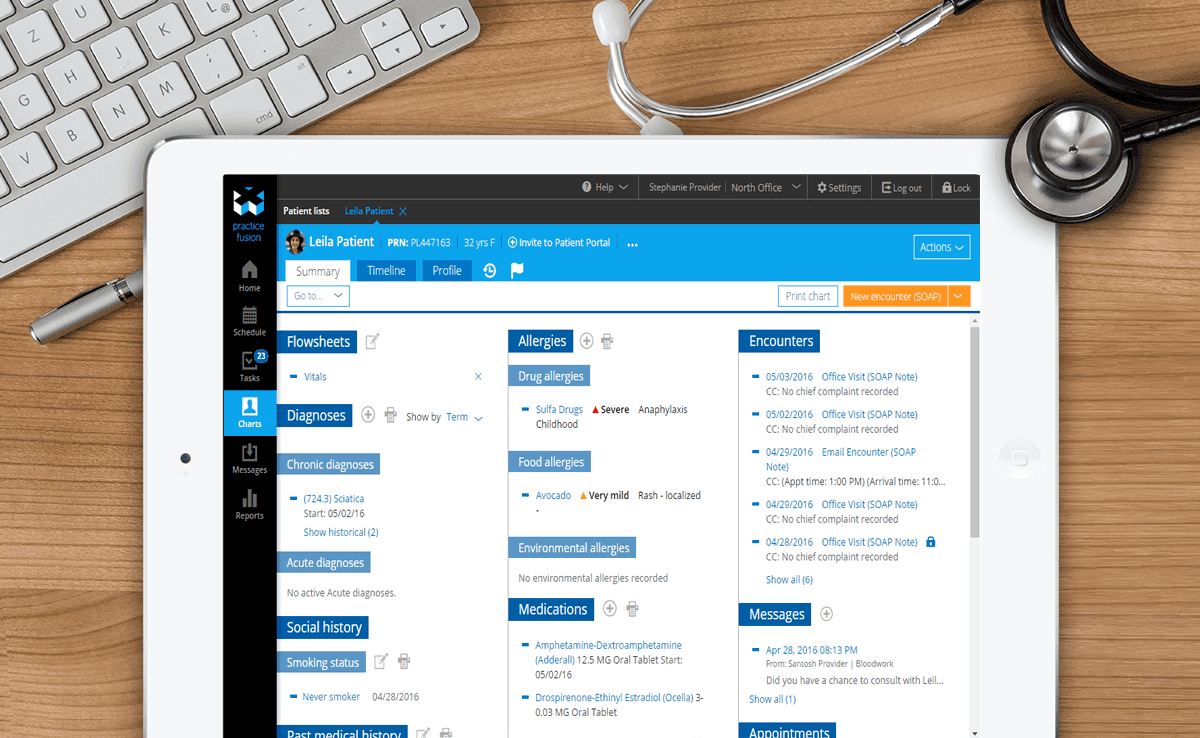
Practice Fusion is a free, cloud-based electronic health record (EHR) platform designed to serve doctors and patients in small practices across the US. At the time, the platform required a massive modernization effort to transition from a legacy Flash-based system to a responsive, multi-device HTML5 experience. Practice Fusion is was acquired by Veradigm Inc. (formerly Allscripts) for $100M in early 2018.
Overview
Practice Fusion is a free, cloud-based electronic health record (EHR) platform designed to serve doctors and patients in small practices across the US. At the time, the platform required a massive modernization effort to transition from a legacy Flash-based system to a responsive, multi-device HTML5 experience. Practice Fusion is was acquired by Veradigm Inc. (formerly Allscripts) for $100M in early 2018.
My Role
As a Senior UX Designer, I owned the end-to-end design for the clinical and charting tracks across desktop and mobile. A critical focus of this overhaul was Flow Sheets—a complex system for entering and reviewing patient data over time. I partnered closely with product, engineering, medical advisors, and business stakeholders to design an interface that rivaled the flexibility of paper while leveraging the power of digital automation.
My Role
As a Senior UX Designer, I owned the end-to-end design for the clinical and charting tracks across desktop and mobile. A critical focus of this overhaul was Flow Sheets—a complex system for entering and reviewing patient data over time. I partnered closely with product, engineering, medical advisors, and business stakeholders to design an interface that rivaled the flexibility of paper while leveraging the power of digital automation.
Impact
I successfully led the platform's transition to modern web standards, established foundational design patterns, and secured multiple utility patents for interface innovations—ultimately delivering one of the cleanest and most efficient EHR interfaces on the market.
Impact
I successfully led the platform's transition to modern web standards, established foundational design patterns, and secured multiple utility patents for interface innovations—ultimately delivering one of the cleanest and most efficient EHR interfaces on the market.
The Challenge
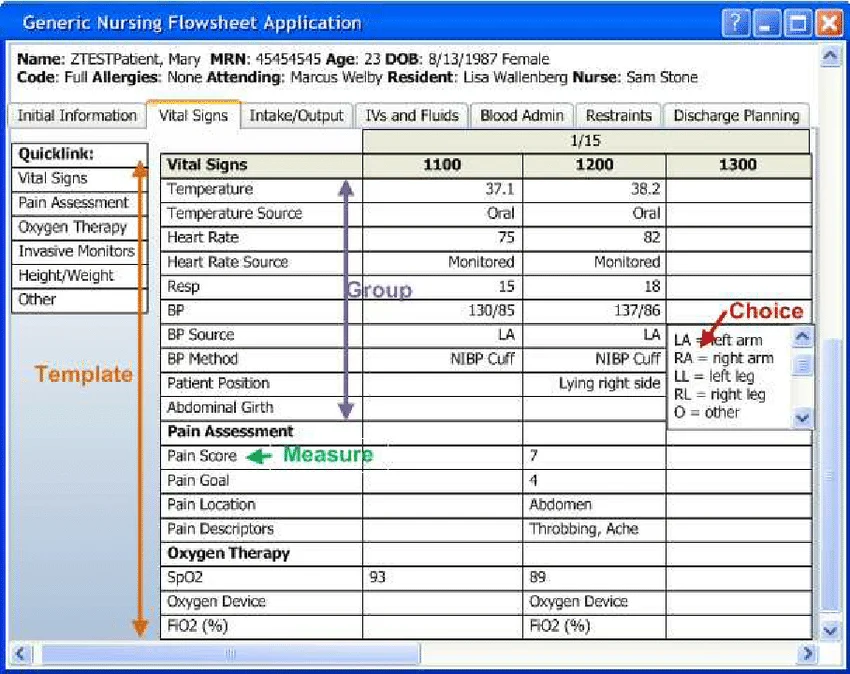
Medical providers are notoriously time-poor: for the last four or five patient visits of the day, a doctor may have zero minutes of free time. Historically, providers relied on paper "flow sheets" for data entry. While messy, paper was fast, flexible, and completely customizable to a specific specialty or patient need.
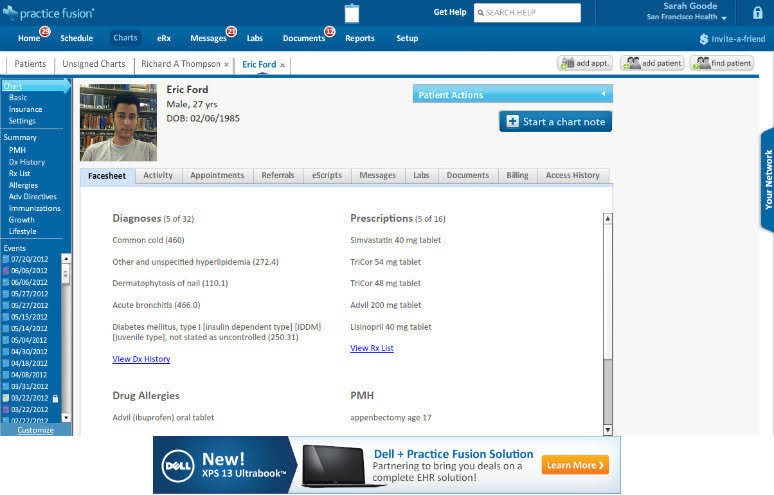
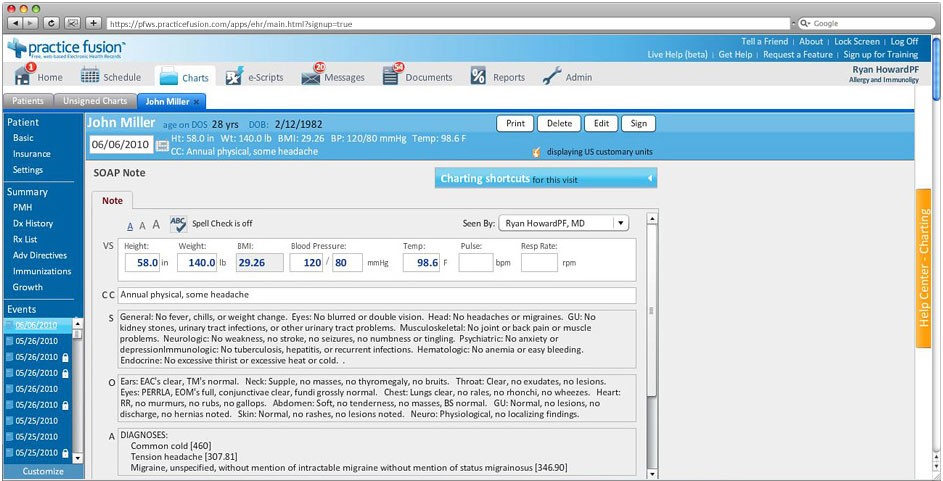
The transition to standard EHRs left providers frustrated. Digital systems were often slow, rigidly standardized by government regulations, and spread critical patient data across multiple, hard-to-find screens. Trust needed to be at the forefront, designing safe, efficient systems for high-risk patient populations while balancing the dense data requirements of diverse health systems.
Legacy modernization is no easy feat, however. Transitioning a complex, feature-heavy Flash product into a seamless, responsive HTML5 experience without disrupting the daily workflows of medical professionals, especially those still often bound to paper workflows.
I was tasked with researching and designing a modernized flow sheet experience that could accommodate a massive variety of specialties, practice sizes, and provider workflows, without slowing doctors down. Overcoming the notoriously cluttered and confusing UX typical of legacy healthcare software, I needed to create an interface that felt modern, intuitive, and fast, while also collecting and displaying the dense tabular data needed to adhere to clinician workflows.
The Challenge
Medical providers are notoriously time-poor: for the last four or five patient visits of the day, a doctor may have zero minutes of free time. Historically, providers relied on paper "flow sheets" for data entry. While messy, paper was fast, flexible, and completely customizable to a specific specialty or patient need.
The transition to standard EHRs left providers frustrated. Digital systems were often slow, rigidly standardized by government regulations, and spread critical patient data across multiple, hard-to-find screens. Trust needed to be at the forefront, designing safe, efficient systems for high-risk patient populations while balancing the dense data requirements of diverse health systems.
Legacy modernization is no easy feat, however. Transitioning a complex, feature-heavy Flash product into a seamless, responsive HTML5 experience without disrupting the daily workflows of medical professionals, especially those still often bound to paper workflows.
I was tasked with researching and designing a modernized flow sheet experience that could accommodate a massive variety of specialties, practice sizes, and provider workflows, without slowing doctors down. Overcoming the notoriously cluttered and confusing UX typical of legacy healthcare software, I needed to create an interface that felt modern, intuitive, and fast, while also collecting and displaying the dense tabular data needed to adhere to clinician workflows.
To appropriately scope and design this highly requested feature, I utilized a mixed-methods research approach to understand both the business constraints and the clinical realities:
Stakeholder Alignment: Leveraging faciliated design techniques I learned and developed at Atlassian, I Collaborated with product managers to define business goals, timelines, scope, and agile staging.
Provider Interviews: Interviewed doctors across various specialties to map their daily workflows and uncover deep needs for data entry and display, traveling to offices for site visits.
Competitive analysis: Evaluated competing EHR systems like Epic, alongside an onsite clinical paper workflows, to identify industry failures and opportunities for innovation.
Heuristic evaluation: Audited Practice Fusion's existing minimal interface for vitals and growth charts to map the migration path to advanced flow sheets.
Literature review: Researched medical table design and reviewed internal documentation to understand how providers interacted with legacy paper flow sheets.
To appropriately scope and design this highly requested feature, I utilized a mixed-methods research approach to understand both the business constraints and the clinical realities:
Stakeholder Alignment: Leveraging faciliated design techniques I learned and developed at Atlassian, I Collaborated with product managers to define business goals, timelines, scope, and agile staging.
Provider Interviews: Interviewed doctors across various specialties to map their daily workflows and uncover deep needs for data entry and display, traveling to offices for site visits.
Competitive analysis: Evaluated competing EHR systems like Epic, alongside an onsite clinical paper workflows, to identify industry failures and opportunities for innovation.
Heuristic evaluation: Audited Practice Fusion's existing minimal interface for vitals and growth charts to map the migration path to advanced flow sheets.
Literature review: Researched medical table design and reviewed internal documentation to understand how providers interacted with legacy paper flow sheets.
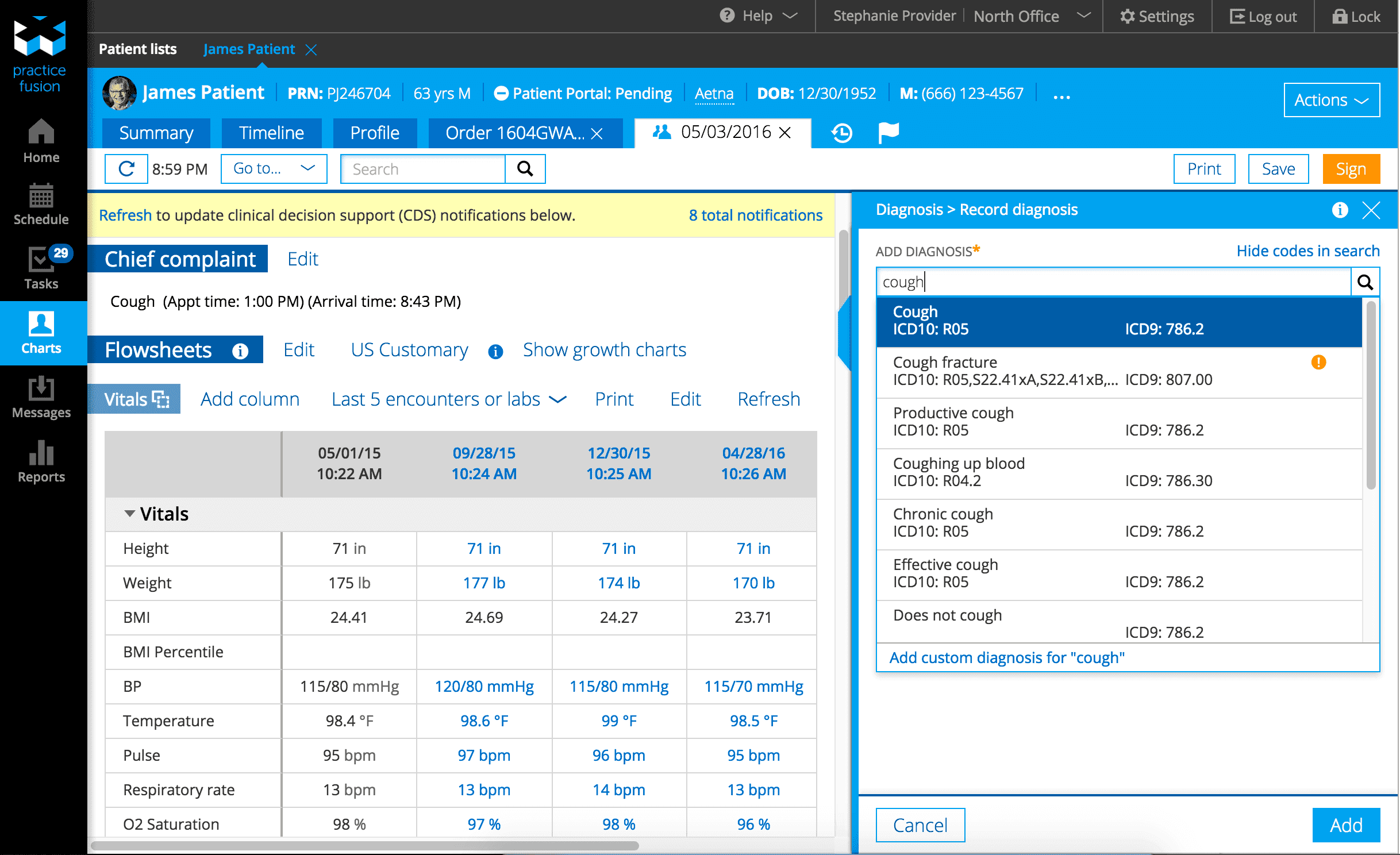
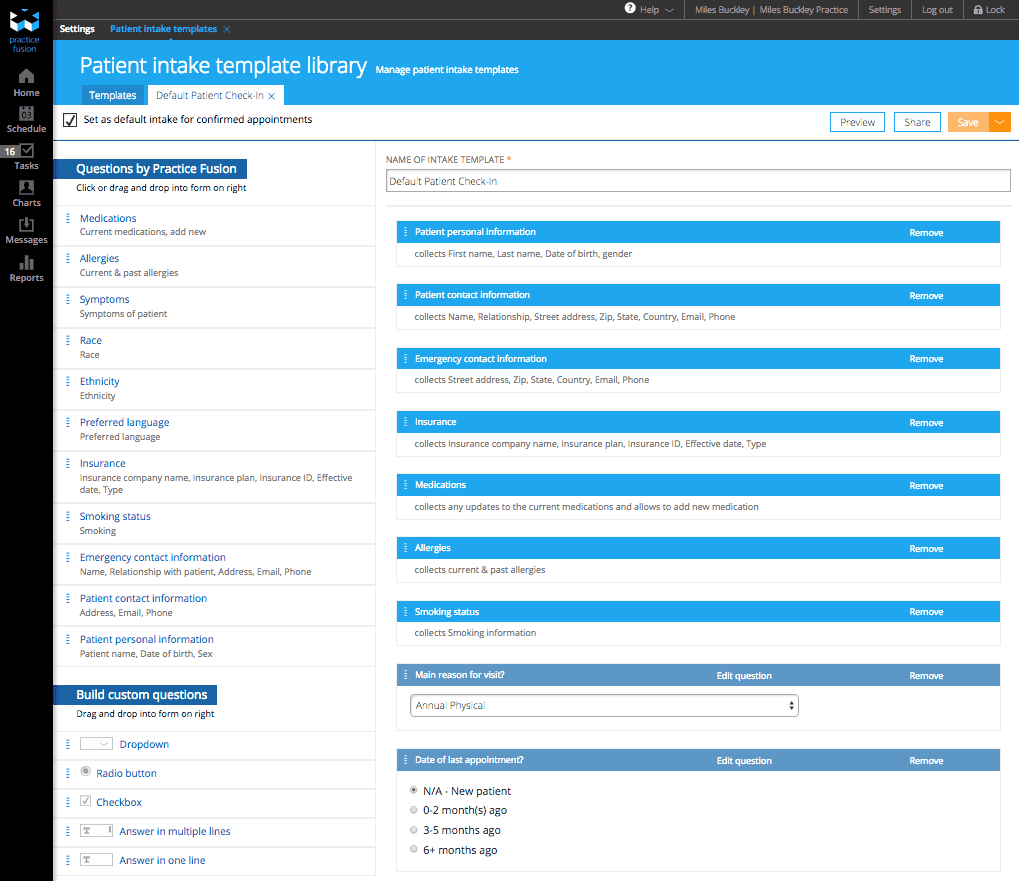
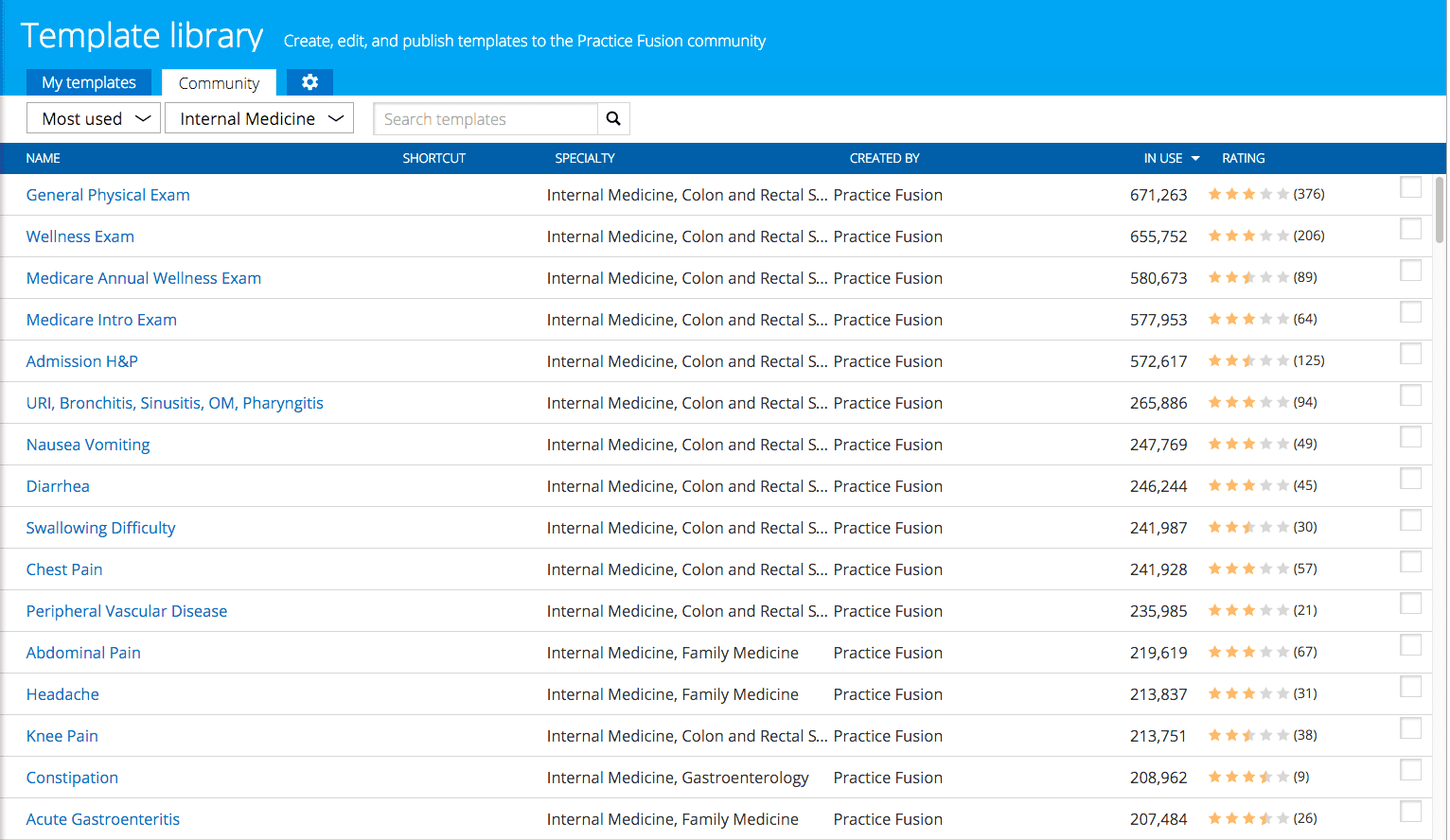
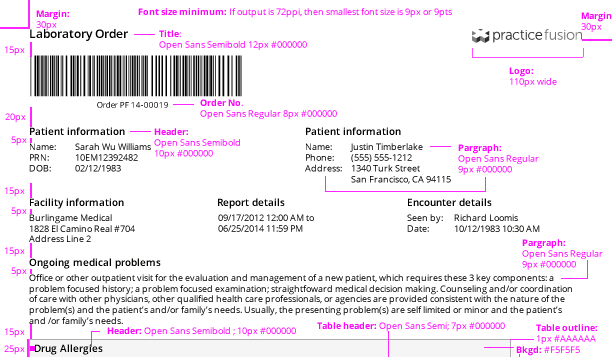
Research and Design
I facilitated preliminary sketching sessions with cross-functional stakeholders to get ideas on the table and align on technical risks, defining six core user stories. From there, I moved into high-fidelity design, building out six user flows as user stories:
Creation & Attachment: Building custom flow sheets, adding observation rows, and attaching them to specific encounters or providers.
Community Sharing: Allowing providers to view, copy, and edit flow sheets created by the broader medical community.
Encounter Integration: Adding and customizing flow sheets directly within a patient encounter or face sheet.
On-the-Fly Editing: Adjusting the data shown and customizing the sheet during an active patient visit.
Data Manipulation: Viewing, sorting, filtering, and traversing historical patient information within the tabular UI.
Print Optimization: Designing clear, readable printed views for complex data that spanned multiple pages, including specific callouts.
Throughout the process, I pushed our core patterns team to evolve the system's visual language, working with design partners to conceptualize a sliding panel interface to maximize screen real estate (now pattened). I validated these interactions through rapid-fire usability testing with providers. In addition, I mentored multiple junior designers and cross-functional team members looking to break into the design field, affording tactical opportunities in the redesign.
To ensure a smooth transition from design to development, I focused heavily on documentation and agile collaboration with comprehensive redlining, evaluating of responsive breakpoints across multiple screen sizes, mobile-optimization for tablet users, documenting edge cases and working to build out multiple phases for build with eng and PM.
Research and Design
I facilitated preliminary sketching sessions with cross-functional stakeholders to get ideas on the table and align on technical risks, defining six core user stories. From there, I moved into high-fidelity design, building out six user flows as user stories:
Creation & Attachment: Building custom flow sheets, adding observation rows, and attaching them to specific encounters or providers.
Community Sharing: Allowing providers to view, copy, and edit flow sheets created by the broader medical community.
Encounter Integration: Adding and customizing flow sheets directly within a patient encounter or face sheet.
On-the-Fly Editing: Adjusting the data shown and customizing the sheet during an active patient visit.
Data Manipulation: Viewing, sorting, filtering, and traversing historical patient information within the tabular UI.
Print Optimization: Designing clear, readable printed views for complex data that spanned multiple pages, including specific callouts.
Throughout the process, I pushed our core patterns team to evolve the system's visual language, working with design partners to conceptualize a sliding panel interface to maximize screen real estate (now pattened). I validated these interactions through rapid-fire usability testing with providers. In addition, I mentored multiple junior designers and cross-functional team members looking to break into the design field, affording tactical opportunities in the redesign.
To ensure a smooth transition from design to development, I focused heavily on documentation and agile collaboration with comprehensive redlining, evaluating of responsive breakpoints across multiple screen sizes, mobile-optimization for tablet users, documenting edge cases and working to build out multiple phases for build with eng and PM.
The modernized Flow Sheets feature was successfully rolled out to all practices utilizing Practice Fusion, drastically improving the speed and cleanliness of longitudinal data entry. The foundational UX patterns established during this project—including the patented UI paradigms—accelerated future product development with HTML5 and elevated the design standard across the company.
We were awarded multiple patents for this work, specifically recognizing the sliding panel designs that contributed to an exceptionally clean and efficient clinical UX. Most importantly, the redesigned charting experience drastically reduced friction in daily medical workflows, driving measurable improvements in provider efficiency and overall customer satisfaction.
"Jerry is the kind of designer you can throw into a new domain, ask to extend and improve the design system and he will do it all with a great attitude and deliver really solid design solutions... He’s dedicated and trustworthy, able to take a design system and run with it, but also makes a point of checking in to make sure everyone’s on the same page. He’s a delight to work with."
— Stefan Klocek, UX Lead at Google (Indirect Manager at Practice Fusion)